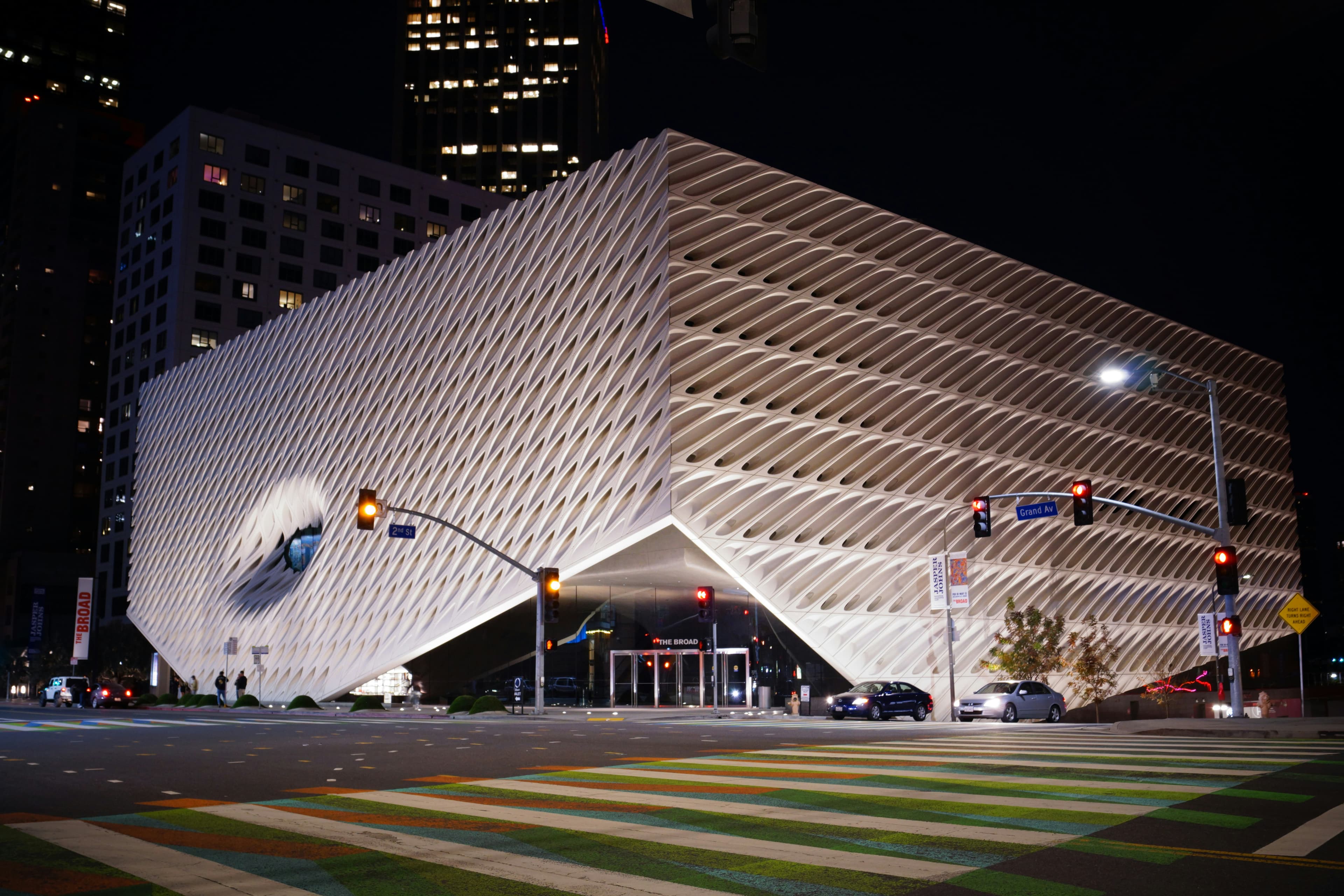
Los Angeles has more free museums than almost any major city in the U.S. The Getty Center and The Broad are always free. The California Science Center is always free. LACMA offers free general admission to LA County residents on weekday afternoons. And the Natural History Museum runs free-admission days throughout the year. You can build an entire cultural life in LA without spending a dollar on entry fees, and most of these museums are even better when you bring a group.
Most people know about one or two of these. Almost nobody takes full advantage. Here's the complete breakdown of every free (or free-adjacent) museum in LA, with honest notes on what makes each one worth your time and how to plan a group visit that doesn't turn into a logistical disaster.
The Getty Center: Always Free, Always Worth It
tired of doing things alone in LA?
Find people to go with on WashedUp. Small group plans, no swiping, no endless chatting. Just plans. That actually happen.
The Getty Center is a $1.3 billion campus perched on a hilltop in Brentwood, designed by architect Richard Meier, and it doesn't charge a single dollar for admission. You pay $20 for parking (or take the Metro 734 bus for free) and that's it. The permanent collection spans European paintings, sculptures, decorative arts, and one of the world's finest photography archives. The rotating exhibitions are consistently world-class.
Why it's great for groups: The Getty is enormous. 110 acres of gardens, galleries, terraces, and panoramic views of the city, the mountains, and the ocean. A group can easily spend three to four hours here without anyone getting bored. The architecture itself is a conversation starter. The Central Garden, designed by artist Robert Irwin, is one of the most beautiful outdoor spaces in LA and a natural gathering point.
What to see first: Start with the West Pavilion for Impressionist paintings (Monet, Renoir, Van Gogh's Irises). Walk through the Central Garden. Then hit whatever temporary exhibition is running. The Getty's rotating shows are often the best in the city.
Practical tips: The tram ride up the hill from the parking garage is part of the experience. The cafe on the terrace level has surprisingly good food with views that rival any restaurant in LA. Weekday mornings are the least crowded. Saturday afternoons get busy but remain manageable because the campus is so large.
Plan your visit with the Getty Center guide.
The Broad: Always Free, Book Ahead
The Broad is a contemporary art museum in downtown LA that houses over 2,000 works from the Broad collection, one of the most significant collections of postwar and contemporary art in the world. Admission is always free, but you need to reserve timed tickets in advance through their website. Walk-up standby is available but can mean waiting 45 minutes to an hour on weekends.
Why it's great for groups: Contemporary art is inherently more discussable than a room full of 16th-century portraits. Standing in front of a Kara Walker silhouette or a Jeff Koons balloon dog with friends creates the kind of "what do you think this means?" conversations that make museum visits memorable. The Broad also has Yayoi Kusama's Infinity Mirrored Room, which is one of the most photographed art installations in the world. Book the separate free ticket for that when you reserve.
What to see first: The third floor has the heavy hitters: Basquiat, Warhol, Lichtenstein, Koons, and Ruscha. The Kusama room is on the first floor and requires its own timed ticket. Don't skip the second floor. The rotating exhibitions there are often the most thought-provoking part of the visit.
Practical tips: Book tickets two to three weeks in advance, especially for weekend slots. Groups of six or more should book individual tickets for the same time slot rather than trying to coordinate one group reservation. The museum is small enough to see everything in 90 minutes, which makes it easy to pair with lunch at Grand Central Market (a 10-minute walk).
See the The Broad guide for exhibition info and nearby food.
LACMA: Free for LA County Residents (Weekday Afternoons)
The Los Angeles County Museum of Art is the largest art museum in the western United States, with a collection of over 147,000 objects spanning 6,000 years. General admission is free for LA County residents every weekday after 3 PM. For everyone else, tickets are $20. The museum is currently in the middle of a massive renovation. The new David Geffen Galleries by architect Peter Zumthor are transforming the campus, so check their website for which galleries are open before you go.
Why it's great for groups: LACMA's collection is so vast and varied that every person in your group will find something that speaks to them. Ancient Egyptian artifacts, Japanese screens, Latin American modernism, contemporary photography. The range is staggering. The outdoor installations, including Chris Burden's Urban Light (the famous 202 restored street lamps), are free to visit anytime and have become one of the most iconic photo spots in LA.
What to see first: Urban Light at sunset is mandatory. Arrive around 5 PM and the lamps against the twilight sky are extraordinary. Inside, the Japanese Art Pavilion is a hidden gem that most visitors skip. The Broad Contemporary Art building houses major works by Richard Serra, Jeff Koons, and Barbara Kruger.
Practical tips: The free-after-3-PM policy makes this an excellent after-work group activity on weekdays. Parking is $20 in the attached garage, but street parking on 6th Street is metered and much cheaper. The museum's restaurant, Ray's, is good but pricey. Save your money and walk to the nearby Farmers Market at the Grove instead.
More details in the LACMA guide.
Natural History Museum: Free First Tuesdays and Special Days
The Natural History Museum of Los Angeles County is the largest natural and historical museum in the western United States, housing over 35 million specimens and artifacts. General admission is $16, but they offer free admission on select days throughout the year, including the first Tuesday of every month for LA County residents (bring proof of residency) and during special free-admission events.
Why it's great for groups: The NHM hits a sweet spot between educational and genuinely entertaining. The Dinosaur Hall features over 300 real fossils, including a T. rex growth series that's one of the only ones in the world. The Gem and Mineral Hall has specimens worth millions. And the Nature Gardens outside are a working urban nature lab with a living wall, edible garden, and a pond ecosystem. There's enough variety here that you could spend four hours without running out of things to see.
What to see first: Dinosaur Hall is the obvious starting point and genuinely awe-inspiring regardless of your age. The Becoming Los Angeles exhibition tells the 500-year history of LA and is surprisingly gripping. Then head outside to the Nature Gardens for fresh air and a change of pace.
Practical tips: First Tuesday free days get crowded. Arrive right at opening (9:30 AM) for the best experience. The museum is in Exposition Park, right next to the California Science Center and the Coliseum, so you can easily combine two museums in one visit. Parking in Exposition Park lots is $15.
Explore the full Natural History Museum guide.
California Science Center: Always Free
The California Science Center is one of the most underrated free attractions in Los Angeles. Permanent exhibitions are always free, and the collection includes the Space Shuttle Endeavour, a real, actual space shuttle that flew 25 missions and traveled over 122 million miles. It's currently housed in a temporary pavilion while the new Samuel Oschin Air and Space Center (opening in 2025) is completed, but it's still one of the most impressive things you can see in LA for zero dollars.
Why it's great for groups: The interactive exhibits make this a museum where people actually do things together instead of silently walking past paintings. The World of Life exhibit has a 50-foot animatronic human body. The Ecosystems gallery recreates an entire kelp forest, a polar region, and a desert. For groups with mixed ages or interests, the hands-on nature of the Science Center means nobody checks out.
What to see first: The Space Shuttle Endeavour is the headliner. Walk around it, look at the heat tiles, read about the missions. Then hit the Ecosystems gallery (the kelp forest is mesmerizing) and the Creative World section for engineering and technology exhibits.
Practical tips: Timed reservations are recommended for the Endeavour exhibit, even though it's free. The Science Center shares Exposition Park with the Natural History Museum, so you can do both in a single day. Parking is $15 in the Exposition Park lots. The IMAX theater costs extra ($8.95) but is worth it for the right film.
First Fridays at NHM: The Ultimate Group Plan
If you want to combine a museum visit with a social event, the Natural History Museum's First Fridays series is the best option in LA. On the first Friday of every month (typically 5 to 10 PM), NHM opens its doors for an evening event featuring DJs, food trucks, bars, special exhibition access, and themed programming. It's a museum visit that feels like a party.
Tickets are usually $20 to $25, so it's not free, but the experience is worth the price and significantly different from a daytime visit. The museum's Dinosaur Hall lit up at night with a DJ playing in the rotunda is something you won't forget.
Why it works for groups: First Fridays solves the classic museum group problem: pacing. During a daytime visit, someone always wants to linger while someone else is ready to move on. At First Fridays, the museum becomes more of a backdrop for socializing, with the exhibitions as optional exploration. Groups can split up and reconvene at the bar. The energy is lively without being overwhelming. Think 500 to 700 people spread across the entire museum.
How to plan it: Buy tickets online as soon as they're released (they can sell out for popular themes). Arrive around 6 PM. The first hour is the least crowded and gives you time to actually look at the exhibits. The food trucks outside are solid but long lines form after 7 PM, so eat early or eat before you arrive.
Frequently Asked Questions
What museums in LA are completely free? The Getty Center, The Broad, and the California Science Center are always free (though The Broad requires advance ticket reservations). LACMA is free for LA County residents on weekday afternoons after 3 PM. The Natural History Museum offers free admission on select days including the first Tuesday of each month for county residents.
Do you need reservations for free museums in LA? The Broad requires timed-entry reservations booked in advance through their website. This is essential, especially on weekends. The Getty Center and California Science Center do not require reservations for general admission but recommend them during peak times. The Space Shuttle Endeavour at the Science Center has separate free timed tickets.
Which free museum in LA is best for a first date? The Getty Center is widely considered the best museum for a date in LA. The hilltop setting, panoramic views, world-class art, and beautiful gardens provide natural conversation starters and a sense of occasion, all without costing anything beyond parking. The Broad is a strong second choice, especially if your date is into contemporary art.
How long should you spend at the Getty Center? Plan for two and a half to four hours at the Getty Center. The campus is 110 acres with multiple gallery pavilions, a central garden, and terrace restaurants. Most visitors spend about three hours, but groups that explore the gardens and all four pavilions can easily fill four hours without rushing.
Is the Griffith Observatory a museum? Yes, the Griffith Observatory functions as both an observatory and a public astronomy museum, and it's completely free. The planetarium shows cost $7 per person, but the exhibits, telescopes, and views are all free. It's one of the most visited public observatories in the world, with over 7 million visitors since its 1935 opening.
Can you visit LACMA for free? LA County residents can visit LACMA for free every weekday after 3 PM with proof of residency. Children under 17 are always free. Everyone else pays $20 for general admission. Target sponsors free admission for all visitors on the second Tuesday of each month through their Target Free Holiday Mondays program.
What's the best free museum in LA for kids? The California Science Center is the best free museum in LA for kids. The interactive exhibits, real Space Shuttle Endeavour, and hands-on science demonstrations are designed to engage children of all ages. The Natural History Museum's Dinosaur Hall is another excellent option, especially for kids who are in their dinosaur phase (which is every kid).
Stay in the loop
Get stories, LA guides, and social tips delivered to your inbox every week. No spam, ever.