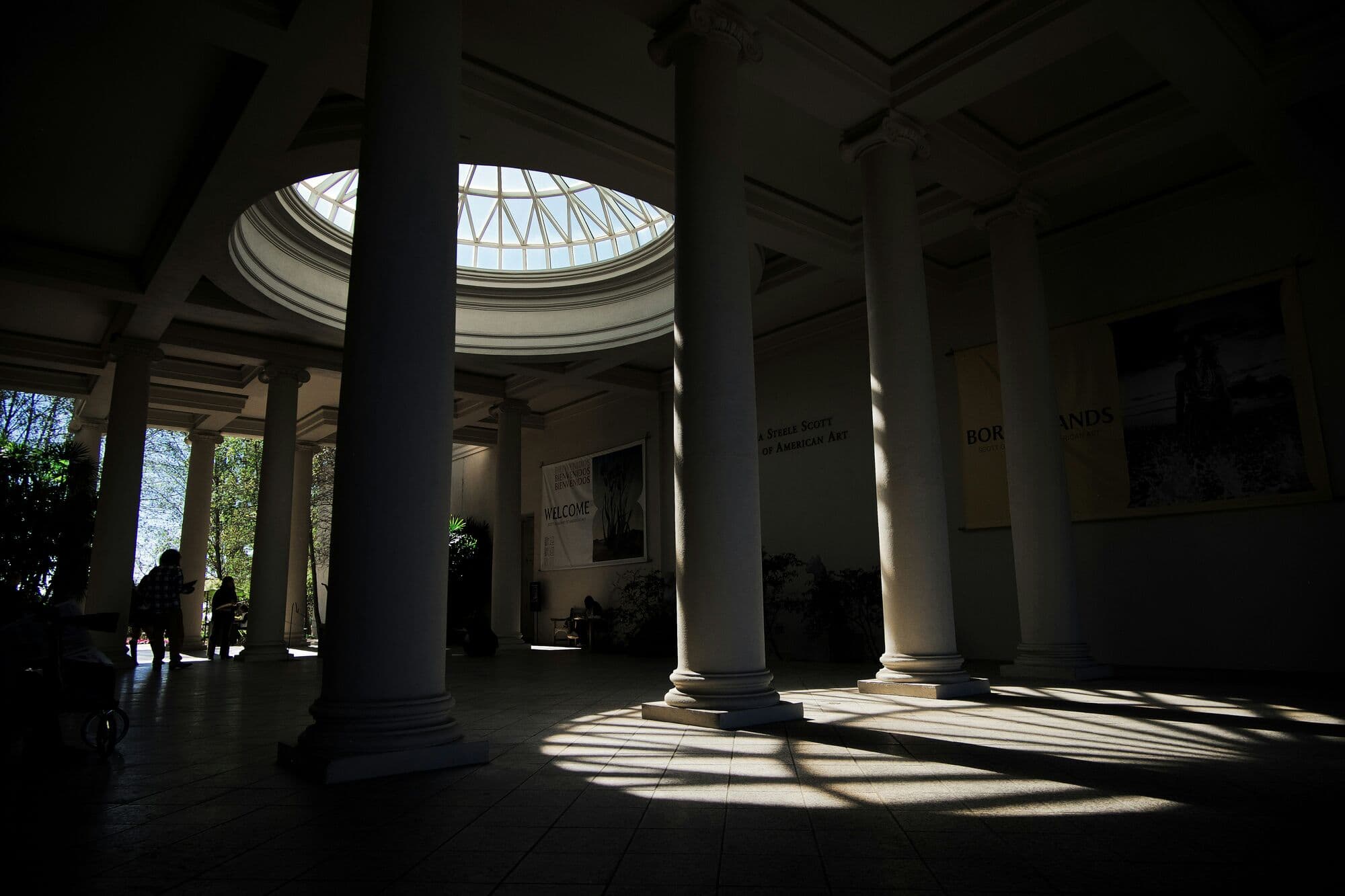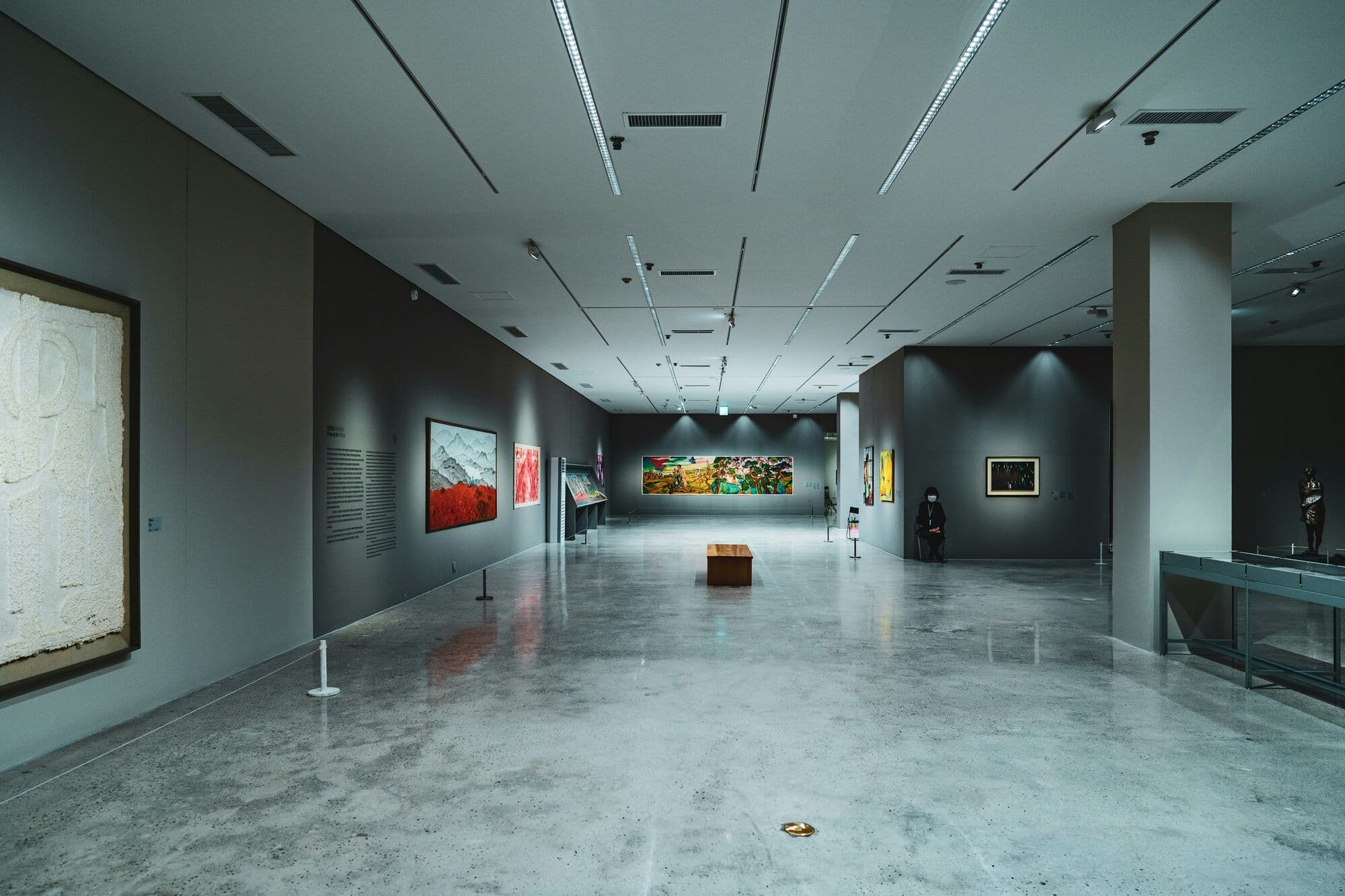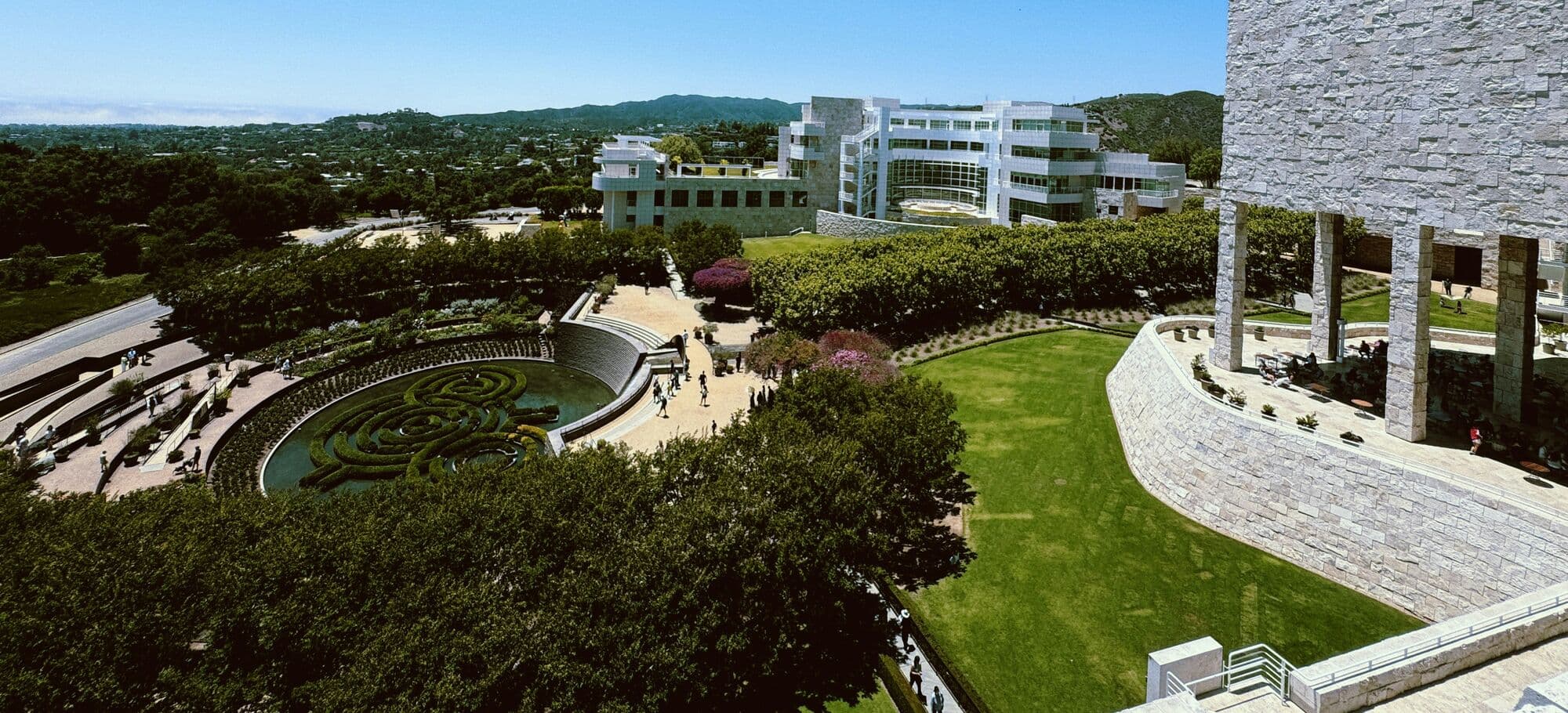
The Getty Center is the kind of place that makes you wonder why you don't do things like this more often. It sits on a hilltop in the Brentwood neighborhood of Los Angeles, and getting there is half the experience. You park at the bottom, board a sleek electric tram, and ride up through the Santa Monica Mountains while the entire LA basin unfolds below you. At the top, you step into a campus of white travertine buildings designed by architect Richard Meier, surrounded by 24 acres of gardens, terraces, and some of the most staggering views in the city.
The Getty houses one of the world's great collections of European paintings, sculpture, decorative arts, illuminated manuscripts, and photography. Van Gogh's Irises. Rembrandt. Monet. Renoir. Medieval manuscripts that are a thousand years old. A photography collection spanning from the 1840s to today. All of it free. This is not a place you rush through. This is a full afternoon, or a full day if you let it be.
The Permanent Collection
The collection is spread across four two-story pavilions (North, East, South, and West) arranged around a central courtyard. Each pavilion is organized roughly by era:
West Pavilion (upper level)
Where most people start, and for good reason. Van Gogh's Irises, Monet's Wheatstacks, Renoir's La Promenade, and Cézanne. The Impressionist galleries here are world-class. The lower level houses photography.
North Pavilion
Medieval and Renaissance art, including illuminated manuscripts that are jaw-droppingly detailed. Currently showing: Beginnings: The Story of Creation in the Middle Ages (through April 13, 2025).
East Pavilion
Italian Renaissance and Baroque works, plus the Family Room where kids can draw, build, and interact with art.
South Pavilion
18th and 19th century French decorative arts. Ornate rooms with furniture, tapestries, and paneled walls literally transported from French estates.
Exhibitions Pavilion
Major rotating shows. Currently showing: How to Be a Guerrilla Girl (through April 27, 2025), celebrating the 40th anniversary of the anonymous feminist art collective.
The Architecture
The Getty Center took 14 years and $1.3 billion to build. Richard Meier designed the entire complex using 16,000 tons of travertine stone, quarried in Bagni di Tivoli, Italy, the same quarry the Romans used for the Colosseum. Each block was split (not cut) to reveal the natural fossil patterns inside. You can see shells, leaves, and feathers embedded in the stone throughout the campus.
The Central Garden
Designed by artist Robert Irwin (not Meier, the two famously disagreed on the design), the Central Garden is a living artwork. A tree-lined walkway descends to a reflecting pool surrounded by more than 500 species of plants, arranged by color and texture. The plantings change with the seasons. Irwin said the garden is "a sculpture in the form of a garden aspiring to be art."
The Views
On a clear day, you can see from the Hollywood Sign to Catalina Island. The west-facing terraces offer some of the best sunset views in Los Angeles, especially on Saturday evenings when the museum stays open until 9 pm.
Visiting Info
Address: 1200 Getty Center Drive, Los Angeles, CA 90049
| Day | Hours |
|---|---|
| Tuesday to Friday | 10 am to 5:30 pm |
| Saturday | 10 am to 9 pm |
| Sunday | 10 am to 5:30 pm |
| Monday | Closed |
Admission: Free. Timed-entry reservation required. Book at getty.edu up to six weeks in advance. Usually available a day or two ahead; weekends fill faster.
Parking
$25 per car · $15 if you arrive after 3 pm · $10 on Saturdays after 3 pm · Active and veteran military park free Memorial Day through Veterans Day with valid ID.
Getting There Without a Car
Metro bus line 734. Stops right at the entrance on Getty Center Drive and Sepulveda. $1.75 one-way. Uber/Lyft drop-off area outside parking structure.
The Tram
Runs every 5 to 8 minutes from the parking garage. Ride takes about 5 minutes. Enclosed, climate-controlled, and free. Views on the way up are spectacular. Don't stare at your phone.
EV Charging
Level 2 chargers on levels P1, P2, P3, and P4. First come, first served.
Where to Eat
Museum Courtyard Coffee Cart. On campus Coffee, pastries, quick drinks. Good for when you arrive at opening and need fuel. You can order ahead online.
The Café. On campus Main lunch spot. Counter-service with multiple stations: Mexican food, grill, soups, salads. Solid food, reasonable prices for a museum. Outdoor seating with views.
The Restaurant at The Getty Center. On campus · Saturday dinner only Sit-down dining with the best view of any restaurant in LA. Open for Saturday dinner only, reservations fill up weeks in advance. If you can get one, do.
Bring Your Own Picnic. On the lawn You're allowed to bring a picnic. The grassy lawn next to the Central Garden is the spot. This is honestly one of the best free date ideas in the city.
How to Do It Right
- Start with the West Pavilion, upper level. This is where the most famous paintings live, and by noon it's the most crowded area. Get there first, then work your way through the other pavilions at your own pace.
- Grab a free tour. The Getty offers free guided tours daily: Architecture Tours, Garden Tours, Collection Highlights Tours, and Spotlight Tours for specific exhibitions. They run throughout the day. Check the "Today at the Getty Center" guide when you arrive, or download the GettyGuide app beforehand.
- Saturday late afternoon is the secret move. The Getty is open until 9 pm on Saturdays. Arrive around 3 pm. You'll pay only $10 for parking (after 3 pm), the morning crowds will be leaving, and you'll get golden hour light on the terraces plus a sunset over the Pacific.
- Weekday mornings are the emptiest. Tuesday through Thursday, 10 am to noon, is when you'll have galleries almost to yourself. Fridays are slightly busier. Avoid school field trip season if you want the quietest experience.
- Don't skip the garden. A lot of people spend all their time in the galleries and rush through the garden. Give it 30 minutes. The descent through the tree-lined stream to the reflecting pool is genuinely meditative.
- Combine with the Getty Villa. The Getty Villa in Pacific Palisades focuses on Greek, Roman, and Etruscan antiquities in a building modeled after an ancient Roman villa. If you visit both in the same day, parking at the second location is free. Just get a voucher from the Information Desk at whichever you visit first.
Nearby
Getty Villa. 15 to 20 min drive, Pacific Palisades Ancient Greek and Roman art in a stunning villa setting.
Santa Monica. 10 to 15 min Pier, beach, Third Street Promenade, excellent restaurants.
Venice Beach. 20 min Boardwalk, canals, Abbot Kinney Boulevard.
UCLA / Hammer Museum. 10 min The Hammer Museum is free and excellent.
Brentwood Country Mart. 5 min Cute shops and restaurants.
FAQ
Is the Getty Center really free? Yes. The art, the gardens, the tours, the tram, all free. You only pay for parking ($25, or less if you come later in the day) and food.
How long should I spend at the Getty? Plan for 3 to 4 hours minimum. Art lovers could easily spend 5 to 6 hours. If you're mainly there for the views, garden, and a quick walk through the highlights, 2 hours works.
Is the Getty good for a group outing? It's one of the best group activities in LA. Free admission means no one has to stress about cost, the campus is huge so you never feel crowded even in a group, and the mix of art, architecture, gardens, and views gives everyone something to enjoy, even people who think they "don't like museums."
Can I take photos at the Getty? Yes. Photography is allowed in the galleries (no flash, no tripods). The outdoor terraces and garden are some of the most photographed spots in LA.
Is it accessible? Fully. The tram is wheelchair accessible, the campus has elevators between all levels, and free wheelchairs and strollers are available at the Museum Entrance Hall.
What if it rains? The galleries are indoors, so rain doesn't cancel a visit. The campus is actually beautiful in the rain. Fewer crowds, and the travertine stone looks different when wet. The garden and terraces are open but exposed.
Is GPS reliable for directions to the Getty? The Getty's own website warns that GPS can give incorrect directions. Use their suggested approach: take the Getty Center Drive exit from the 405 freeway.
What is the difference between the Getty Center and the Getty Villa? The Getty Center in Brentwood focuses on European art from the Middle Ages to the present. The Getty Villa in Malibu is dedicated to ancient Greek, Roman, and Etruscan art and is modeled after a Roman villa.
Is the Getty Museum free? Yes, both the Getty Center and the Getty Villa offer free admission. Parking is $20 per car at each location.
What is the most famous painting at the Getty? One of the most famous works is "Irises" by Vincent van Gogh (1889), along with notable pieces by Rembrandt, Monet, and Renoir.
Make It a WashedUp Plan
Ready to go? Post a plan on WashedUp and find people to explore the Getty with. Free art, incredible views, easy group outing.