I moved to LA and spent the first eight months eating dinner alone on my couch, convinced the city had broken something in me.
Not dramatic. Just true. I had a job, I had a neighborhood I liked, I had the same text thread I'd been neglecting since college. What I didn't have was anyone to call on a Thursday when I wanted to do something. Anything. Didn't matter what. The problem wasn't that LA had nothing going on. I could see that wasn't true. The problem was that everything seemed to be happening for other people, in groups that had already formed, in social containers I had no idea how to enter.
Most guides skip that part. They go straight to "here are seven meetups in Los Angeles." They don't name the feeling first. The feeling of watching a city live loudly around you while you feel weirdly, specifically invisible inside it. So let's start there, because that feeling is not a personal failing. It's a structural outcome.
tired of doing things alone in LA?
Find people to go with on WashedUp. Small group plans, no swiping, no endless chatting. Just plans. That actually happen.
la isn't lonely. it's invisible
The loneliness reputation is real but the diagnosis is wrong. The research supports this read. LA sprawl is the first culprit. When your city is seventy miles wide and organized entirely around cars, proximity stops being social. You can live four blocks from someone interesting and never cross their path, because you each drive to work, drive to the grocery store, drive to the gym, and park in a structure. The chance encounter that seeds a friendship in a denser city literally does not happen here at the same rate.
The third-place crisis makes it worse. Third places are the in-between spots where community forms without planning: the corner bar you walk to, the café where the owner knows your order, the park bench where people actually linger. LA has some of these. But the car-first infrastructure means most people can't walk to them. You have to decide to go, drive there, find parking, and by that point you've turned a spontaneous social impulse into a twenty-minute errand. Most nights, the couch wins.
This is why people feel isolated in Los Angeles in a way that's specific and strange. The weather is beautiful. The city is full. The isolation is infrastructural, not cultural. LA is not cold. It's just spread out in a way that makes accidental community nearly impossible. The scene exists. The layout hides it.
the scene that's already there
The hidden social infrastructure of Los Angeles is genuinely rich. It's just not on a map anyone hands you.
There are running clubs that meet before sunrise in Griffith-adjacent neighborhoods and have been running the same route for years. There are ceramics studios where the Tuesday night class has the same eight people every session and yes, they go for drinks after, and yes, they have been doing this for two years. There are Sunday markets where the same vendors and the same regulars show up with enough consistency that it functions like a neighborhood square. There are open mics that draw a crowd of fifty who all know each other and have been rotating through the same rooms for a decade. Per the LA Times, which ran a piece on this in December 2024, social clubs specifically designed for adult friend-making in LA are growing precisely because the need is acute. The city knows it has a problem and it is quietly building a response.
Meetup reportedly lists over 153,000 members in Downtown LA-focused groups alone. That is not a small number. That is a city inside the city. Club LA on Meetup runs monthly events. bingo, karaoke, movie nights. built specifically for young adults who want a recurring, low-stakes reason to show up somewhere. The scene exists. It is operating right now. The problem is almost nobody discovers it by accident.
why nobody told you about it
The best communities in LA don't advertise because they don't need to. Word of mouth fills them. A ceramics class fills up before it posts anywhere public. A Sunday drum circle in Leimert Park has been running so long it has regulars who moved away and fly back to attend. The Helms Bakery complex in Culver City has a slow-burn weekend social scene built on foot traffic and the specific kind of person who lingers near good food on a Saturday morning. These communities grow by osmosis. Which is wonderful if you're already inside them and genuinely invisible if you're not.
This is the discovery problem. Not that good things aren't happening. That good things are happening in social containers with no front door that faces the street. You find them through a friend who knows a friend, or you show up to something alone three times until someone finally invites you to the thing that happens after, or you get lucky. Most people don't get lucky and then they conclude, incorrectly, that LA doesn't have community.
It does. You just need a key.
the neighborhoods where it's easiest to stumble in
Some neighborhoods solve the discovery problem better than others. This is where to look first.
Leimert Park is the most genuine community hub on this list. The World Stage has been running jazz programming for decades. The Sunday drum circle is not a performance for newcomers. It's a real, recurring, multigenerational gathering that functions exactly like a third place should. Show up two Sundays in a row and you will recognize faces. Show up five times and someone will talk to you.
Silver Lake has a slower, more diffuse version of the same thing. The farmer's market has its regulars. The Intelligentsia on Sunset Junction is a known gathering point for a specific kind of creative-adjacent person who lives nearby and has nowhere better to be on a weekend morning. The social density isn't loud, but it's there.
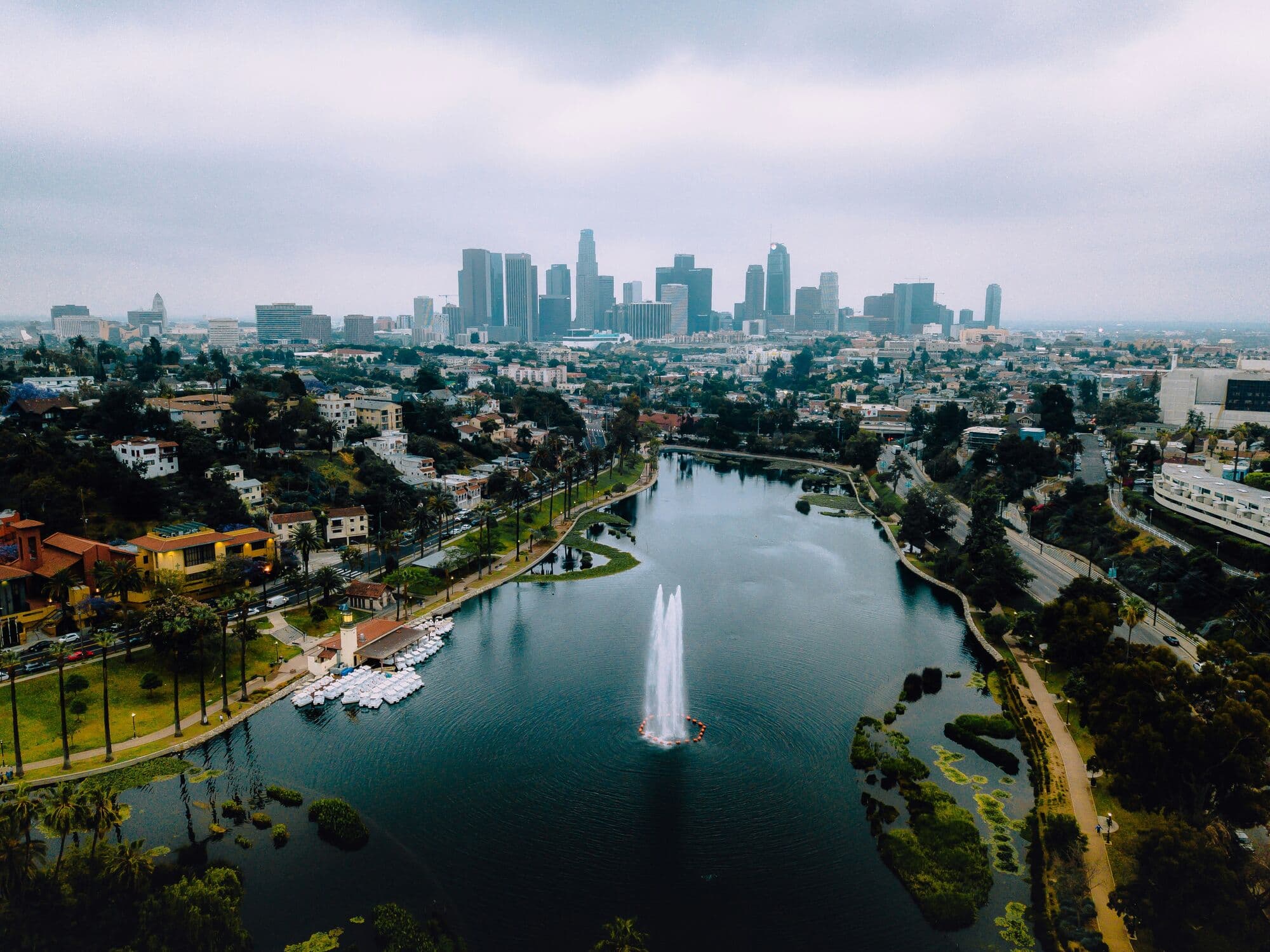
Echo Park's lake walkers are a real subculture. People loop the lake at the same times on the same days and over months those loops start to overlap. The creative community in Echo Park is tight and it's built around that kind of quiet, recurring physical proximity.
Koreatown doesn't sleep, which matters more than people realize. The 24-hour social density there is unusual for LA. You can show up somewhere in Koreatown at 11pm on a weeknight and encounter something that feels like a city. The karaoke culture specifically creates a recurring, low-stakes reason to come back. It's a commitment mechanism disguised as a good time.
Highland Park's York Boulevard café scene is quieter but the DIY show community there is genuinely warm toward new faces. If you show up to enough things on York you start to see the same people.
Atwater Village has a small-town-within-the-city quality that feels almost disorienting the first time you notice it. It's a neighborhood where people wave. Where the same people are at the same coffee shop on Saturday mornings. Atwater Village has had four WashedUp plans fill, from karaoke to a free comedy show, which means the people who are using a discovery layer to find each other are already clustering there.
Culver City's arts district and the Helms Bakery complex have a more picked scene but it's real. Grand Central Market downtown is one of the few places in LA where the layout itself forces communal eating and the daily social mixing that comes with it.
the 'who do i go with' problem
Here is the thing nobody says out loud: the problem isn't finding activities. It's finding someone to do them with.
You can find a ceramics class. You can find a Sunday market. You can find the jazz night in Leimert Park. What you cannot easily find is a person to text at 6pm on a Friday and say "do you want to do this thing tonight." That requires either a pre-existing social infrastructure or enough courage to show up alone to a structured event where everyone else seems to already know each other.
Showing up alone to a meetup as an adult is genuinely difficult. Most competitor content treating activities as the solution sidesteps this completely. The emotional barrier to entry is real. Most people will not do it. Not because they're antisocial but because the social risk of walking into a room alone where you know nobody is genuinely high, and the upside is uncertain.
On WashedUp, more than 300 plans have filled with a group of three or more as of October 2026. A plan called "hospital of emotions art exhibit" ran on a Friday evening and filled with seven people. These are not strangers who found a listing. They're people who found each other first, then went together. That sequencing matters. Finding the person before finding the plan removes the worst part of the equation.
Want to go to a market in Atwater Village but not alone? find people to go with on WashedUp.
how people actually find their people in la
Honest answer: word of mouth still wins. If you know someone who knows someone who's already inside a scene, that's the fastest path. But that requires already having people, which is the problem we're solving. Circular.
Recurring formats are the second-best answer. Not one-off events. Recurring things. Same time, same place, every week or every month. The commitment mechanism matters. A trivia night you go to once is an activity. A trivia night you go to every Wednesday for three months is a social life. The format does the work that the city's layout refuses to do.
Discovery tools are changing this calculus faster than most people realize. The app layer is genuinely new. Across WashedUp as a whole, more than 900 people have posted or joined a plan as of October 2026. Those are real numbers from a tool that's been running for a short time. Among plans that list a neighborhood, Hollywood, Downtown LA, Venice and Santa Monica have had the most fill. That concentration reflects where people are already looking for each other.
The shift discovery tools make is specific. They solve the sequencing problem. Instead of finding an event and hoping someone you like is there, you find the person (or the small group of people) who want to go to the same kind of thing, and you go together. That's a fundamentally different experience than showing up alone and hoping for the best.
Wondering who to go to an open mic in Highland Park with, or who else wants to do a late-night loop through Koreatown? find people to go with.
the key is real
LA is not the loneliest city in America. It is the least legible one. The social infrastructure exists. It is warm and weird and genuinely good in places. The Leimert Park drum circle is real. The Atwater Village regulars are real. The York Boulevard café scene is real. The late-night karaoke crews in Koreatown have been doing their thing longer than most apps have existed.
The issue is that none of it is visible until someone points you toward it. The sprawl hides it. The car culture hides it. The lack of third places you can walk to hides it. The social containers don't have front doors that face the street.
This city rewards the person who figures out the key. The key is recurring formats, specific neighborhoods, and knowing who you're going with before you walk in the door.
You already know which activities you want. The question is who's going with you. Find people to go with on WashedUp. The plans are already there.
Stay in the loop
Get stories, LA guides, and social tips delivered to your inbox every week. No spam, ever.