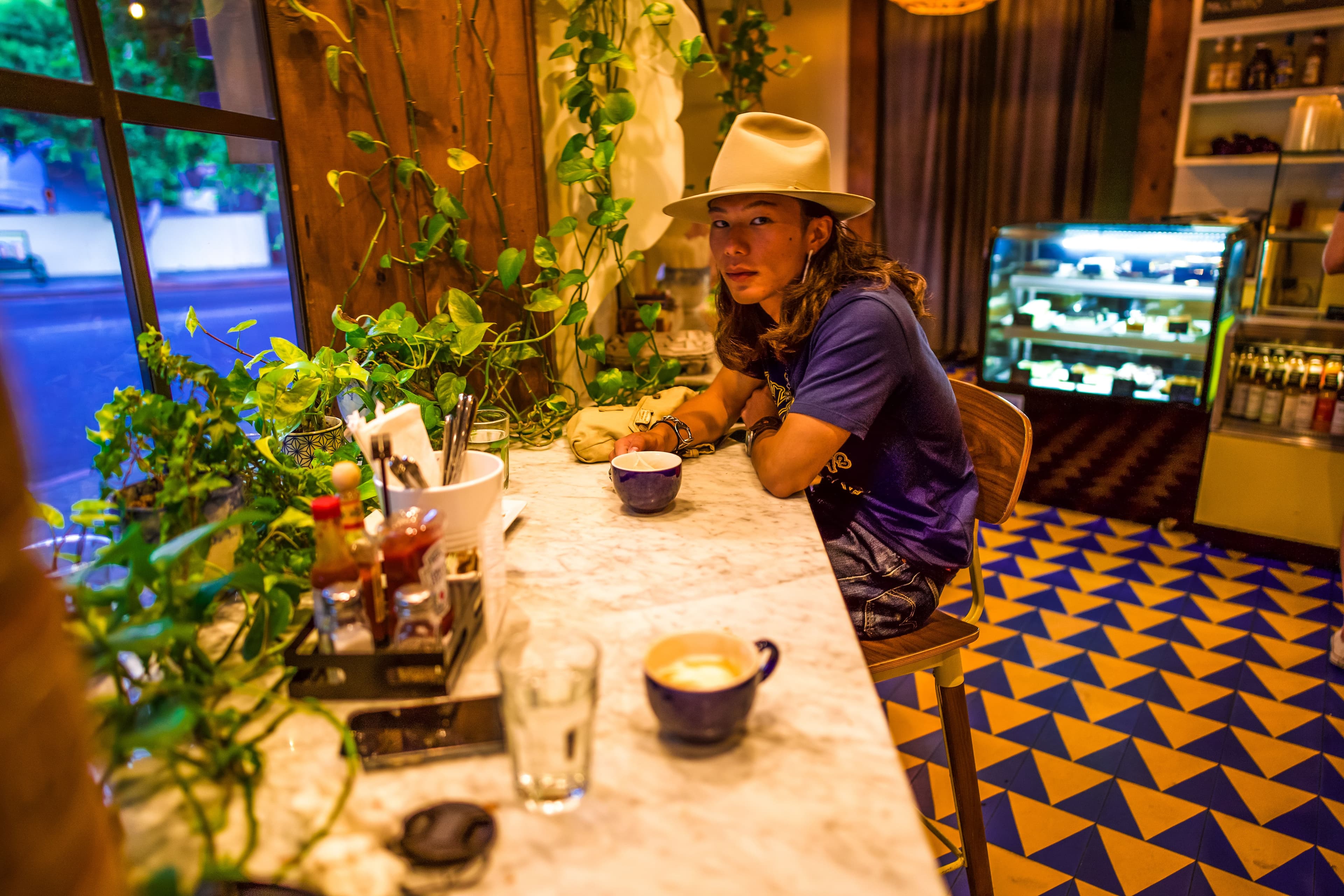
why making friends in la hits different when you work remotely (no office = no social safety net)
Most guides to making friends in a new city assume you have an office. You don't. That's the whole problem.
Office workers get friction-free, repeated contact on day one. They complain about their commute to the same person three mornings in a row. They get lunch-invited. They overhear a conversation about a band and end up at a show on Friday. None of that is deep friendship, but it's the raw material. Repeated exposure to the same people is how friendship actually forms. Without an office, you have to build that entire infrastructure yourself, on purpose, from scratch.
LA makes this harder in a specific way. The city is genuinely warm but structurally dispersed. Everyone lives 25 minutes from everyone else, everyone has a thing they're working on, and the unspoken social contract here is that being busy is a virtue. Moving from a denser city where you could just show up to a neighborhood bar and run into a familiar face? That doesn't translate to Los Angeles. You can spend six months in Silver Lake or Mar Vista feeling like you almost have a social life. Almost.
Remote workers who moved here report the same pattern: the first few weeks feel fine because the city is new and stimulating. Month two is when the apartment starts feeling like a waiting room. You're on Slack all day, you go for a walk, you come home, you cook. You have text threads with people who are busy.
Research in social psychology is consistent on this point: friendship requires repeated, unplanned-feeling contact, not one-off meetings. One great conversation at a bar gets you a contact in your phone who you'll never text. The goal is to engineer the conditions for that repeated contact. Everything in this guide is aimed at that.
How do remote workers make friends when they move to a new city? They stop waiting for social life to happen and start building the recurring situations where it can.
the app tier list: what actually works in la in 2026 (meetup, bumble bff, washedup, friender, peanut. honest verdicts)
The best app for making friends in a new city in 2026 depends on what you're trying to solve. Most apps solve the discovery problem. Very few solve the coordination problem. Here's the honest breakdown for LA specifically.
meetup. The most consistently useful app for LA newcomers, per Time Out's reporting on apps that actually worked for social planning. Meetup's strength is interest-based recurring groups: hiking clubs in the Santa Monica Mountains, book clubs, language exchanges, pop-punk fan meetups in Silver Lake. The recurring structure is the feature. You go once, you feel awkward, you go again, you recognize a face, you go a third time and you're talking to someone. Per Time Out, it's the go-to for finding these groups, and in LA the density of groups is high enough that you can usually find something within your neighborhood radius. Most groups are free or low-cost. This is your starting point.
bumble bff. Widely used in LA, per the LA Times, and the user base is large enough that you'll get activity. It's built for one-to-one friend matching, which means it works like a dating app: swipe, match, set up a coffee, see if the chemistry is there. The problem is conversion. A lot of people are on Bumble BFF because they want friends in theory. Getting someone off the app and into an actual recurring situation takes real effort. Is Bumble BFF actually good for making friends in Los Angeles? For one-on-one coffee meetups, yes. For building a social circle, you'll need to stack it with something group-oriented.
washedup. Solves a different problem than the other apps, and it's the one most guides completely ignore. Finding an event in LA is not hard. Finding a specific person to go to that event with is. WashedUp is built around plans: someone posts that they're going to a thing, you join them, you go together. The coordination layer is the product. Right now there are 8 live plans on WashedUp that fit the newcomer-trying-to-go-out-in-LA use case, with 3 happening in the next 7 days. Across the platform, 454 people have joined plans and 239 plans have happened across LA. The plans lean weekend-heavy (Saturday is the busiest day by a wide margin) and skew late, after 10pm. A recent plan called "Come dance or just enjoy the vibe: Afro Caribbean and Dancehall" on a Sunday drew 3 people and filled. Small, but real. want to go do something this weekend but don't want to go alone? find people to go with on WashedUp.
peanut. Per Time Out, Peanut is described as bringing women together through events and real-life connections with less of the awkward small-talk dynamic. It skews toward women, particularly in the 30s bracket, and has been expanding beyond its original moms-focused positioning. Worth checking if that demographic fits you. Confidence on LA-specific density is medium; your experience will vary by neighborhood.
friender. Less data on LA-specific activity. It operates on a group-matching model rather than one-to-one, which is theoretically better for friend-group building. Worth a download, low friction to try.
What about Hinge? Not for this. Per reporting from Time Out London, Hinge is a dating app and is less effective as a dedicated friend-finding tool. The intention mismatch creates friction you don't need.
The honest answer on apps: use Meetup for recurring group access, Bumble BFF for one-on-one coffee pipeline, and WashedUp for the moment you want to actually go somewhere with someone this week.
beyond apps: la social clubs and recurring groups worth your first month
The best social infrastructure in LA for newcomers is free or close to it, and most guides skip the free options entirely.
LA Breakfast Club runs recurring public breakfast gatherings open to anyone. No membership, no cost barrier, group format by design. It's the kind of thing that feels too easy to work, and then you go and it does. Put it on your calendar for week one.
LA County Parks and Recreation community centers run programming across multiple neighborhoods: fitness classes, art workshops, community events. Free or low-cost, genuinely neighborhood-embedded, and attended by people who actually live near you rather than people who drove 40 minutes to attend a "social event."
Junk Journal Club is worth a specific mention because it addresses something most friend-making options don't: it's alcohol-free and craft-focused, which immediately changes the demographic and the dynamic. Per the LA Times, the club runs low-cost events drawing attendees from across the region and maintains a large Discord community. The Discord matters because it gives you the repeated digital contact between IRL meetups that actually builds familiarity. This is the recurring-contact rule in action.
Groundfloor in Echo Park is a coworking and social club hybrid. Per the LA Times, it reportedly charges around $200 a month for access to coworking, a fitness center, and events. That's real money, and it's worth naming it alongside the free alternatives rather than treating it as the obvious answer. If your freelance income is stable and you want a built-in professional community, it may be worth it. If you're three months into a new city and watching your spending, the LA Breakfast Club and a Meetup group gets you further for less.
Soho Works West Hollywood is another coworking option with a built-in professional community, skewing toward creative and entertainment industry workers. The social density is there. The price point is also there.
What LA social clubs are best for meeting people as an adult? The ones with recurring programming, low cost-of-entry, and a format that creates conversation naturally. Junk Journal Club, LA Breakfast Club, and your nearest LA County Parks community center are the underrated answers.
the neighborhood factor: where you live in la shapes who you'll meet
No guide to making friends in LA addresses this, and it matters more than most app choices.
Silver Lake and Los Feliz have the highest density of Meetup groups on the eastside and a walkable-enough street grid that you can become a "regular" somewhere within a few months. The social scene skews creative, 30s, and slightly more likely to show up to a thing on a weeknight. If you work remotely and want to build a neighborhood social life rather than a car-dependent one, this is the easiest zip code to do it in.
DTLA has infrastructure for it: EightyTwo is a social arcade bar that comes up repeatedly in the context of adult friend-making, and the neighborhood has a growing after-work-and-weeknight crowd. Across WashedUp, DTLA is one of the most active neighborhoods this month with 4 plans happening there. The density is real. The challenge is that DTLA still has an "I drove in for this" feeling; it's harder to build the casual recurring contact that comes from living close.
Mid-City, Mar Vista, and City West are where WashedUp plan activity is currently concentrated for the topic-specific plans: 2 each across those neighborhoods. They're not the neighborhoods that get the most press, but they're where people are actually making plans and going.
Koreatown is dense, walkable, and has a younger renter population that moves fast socially. It doesn't have the same Meetup group density as Silver Lake, but proximity to neighbors matters more here because the physical environment creates more overlap.
Venice and the westside skew outdoor-activity-heavy: hiking groups in the Santa Monica Mountains, beach runs, weekend group fitness. If that's your social entry point, the westside works. The distances are harder if your other plans are eastside-based.
What neighborhoods in LA are easiest to meet people in? Silver Lake for eastside group-activity density. DTLA for structured social venues. Mar Vista and Mid-City for where people are actually making spontaneous plans right now.
the recurring contact rule. and how to actually turn a first meeting into a real friend
One great conversation does not make a friend. This is the part no one says directly.
The research is consistent: friendship forms through repeated, low-stakes contact over time. The office provides this accidentally. In LA, without an office, you have to engineer it. One Meetup attendance is not enough. One coffee through Bumble BFF is not enough. The thing that converts an acquaintance to a friend is showing up in the same context multiple times until the relationship develops texture.
The practical version of this: pick two recurring things and commit to six appearances each before evaluating. A Meetup hiking group in Griffith Park. A Junk Journal Club session once a month. A standing Saturday morning thing. Six appearances is roughly where faces become names and names become "hey, want to grab food after."
The second move is the same-week follow-up. After a first meeting with someone you want to know better, propose something specific within the same week. Not "we should hang sometime." A specific thing: "I'm going to that thing at EightyTwo on Thursday, come." The window is short. After a week the social momentum drops significantly.
How long does it take to make real friends after moving to LA? Most people who moved here and built a real social circle report that the first meaningful friendships solidified around the four to six month mark. Not because LA is cold, but because the math of repeated contact takes time to run. The people who got there faster started their recurring situations in the first two weeks.
want to find someone who's already planning to go to something this week? find people to go with.
your first 90 days in la: a week-by-week social action plan
weeks 1 to 2: infrastructure only. Download Meetup, WashedUp, and Bumble BFF. Browse, don't improve. Attend one LA Breakfast Club gathering. Join one Meetup group in your neighborhood and attend the next event, even if the timing is inconvenient. The goal is not to make a friend. The goal is to put your face in a room.
weeks 3 to 4: add a coworking day. Pick one day a week to work outside your apartment. Groundfloor in Echo Park if budget allows and you're on the eastside. Soho Works West Hollywood if you're on the westside. A public table at an LA County community center if you want free. The point is routine proximity to other humans during the workday, which is the thing remote work removes.
month 2: double down on what's working. By now you have attended three or four things. One or two of them had someone interesting. Those are the people to follow up with this month. Propose a specific plan. Check WashedUp for what's happening this weekend and bring someone rather than going alone. This month is about converting first contacts into second contacts.
month 3: let it compound. The people you've seen four or five times now know you. The hiking group knows your name. The Junk Journal Club Discord has your handle. You've been to EightyTwo twice and there's a person there you've talked to both times. This is the month where it starts to feel less effortful. You're not making friends. You already have the beginnings of them.
Are there free ways to meet people in Los Angeles without paying for apps? Yes. LA Breakfast Club, LA County Parks programming, Meetup groups (most are free), Griffith Park hiking groups, and WashedUp are all free or low-cost entry points. You do not need to pay $200 a month to build a social life in LA.
Are there apps or communities specifically for newcomers to LA? Not one dedicated one that owns the space. WashedUp skews toward people actively trying to make plans happen, which functionally includes a lot of newcomers. The LA Breakfast Club and Junk Journal Club both attract people who moved here and are looking to meet people, even if that's not their stated mission.
The 90-day plan is not a guarantee. LA's social physics are real. But the people who moved here and built something did one thing consistently: they kept showing up to the same places. The city rewards repetition more than it rewards effort.
want to actually go to something this week instead of planning to eventually? find people to go with on WashedUp.