The best apps to meet people in LA right now are WashedUp for group plans you actually go to, Bumble BFF and Hey Vina for one-on-one friend matching, Meetup and Strava for interest-based groups, and Timeleft or 222 for structured dinners with strangers. The right pick depends on whether you want one friend or a plan tonight.
That answer is true, but it's also incomplete, because almost every app roundup stops there. It lists ten apps, gives each one three adjectives, and calls it a day. Nobody tells you why an app that works great for a friend in Santa Monica does nothing for you in the Valley. Nobody tells you the match isn't the hard part. Getting from "we matched" to "we are actually at the same place at the same time" is the hard part, and in a city built around a car and a 45-minute buffer, that gap is where most friendships in LA quietly die.
what actually makes a social app work in la (and why most don't)
tired of doing things alone in LA?
Find people to go with on WashedUp. Small group plans, no swiping, no endless chatting. Just plans. That actually happen.
A social app works in LA when it solves three things at once: it matches you with people close enough that meeting up doesn't cost you an hour each way, it produces an actual plan instead of a chat thread that fades out, and it's honest about whether you're getting one new friend or a full group to show up with tonight. Most apps solve one of these. Almost none solve all three.
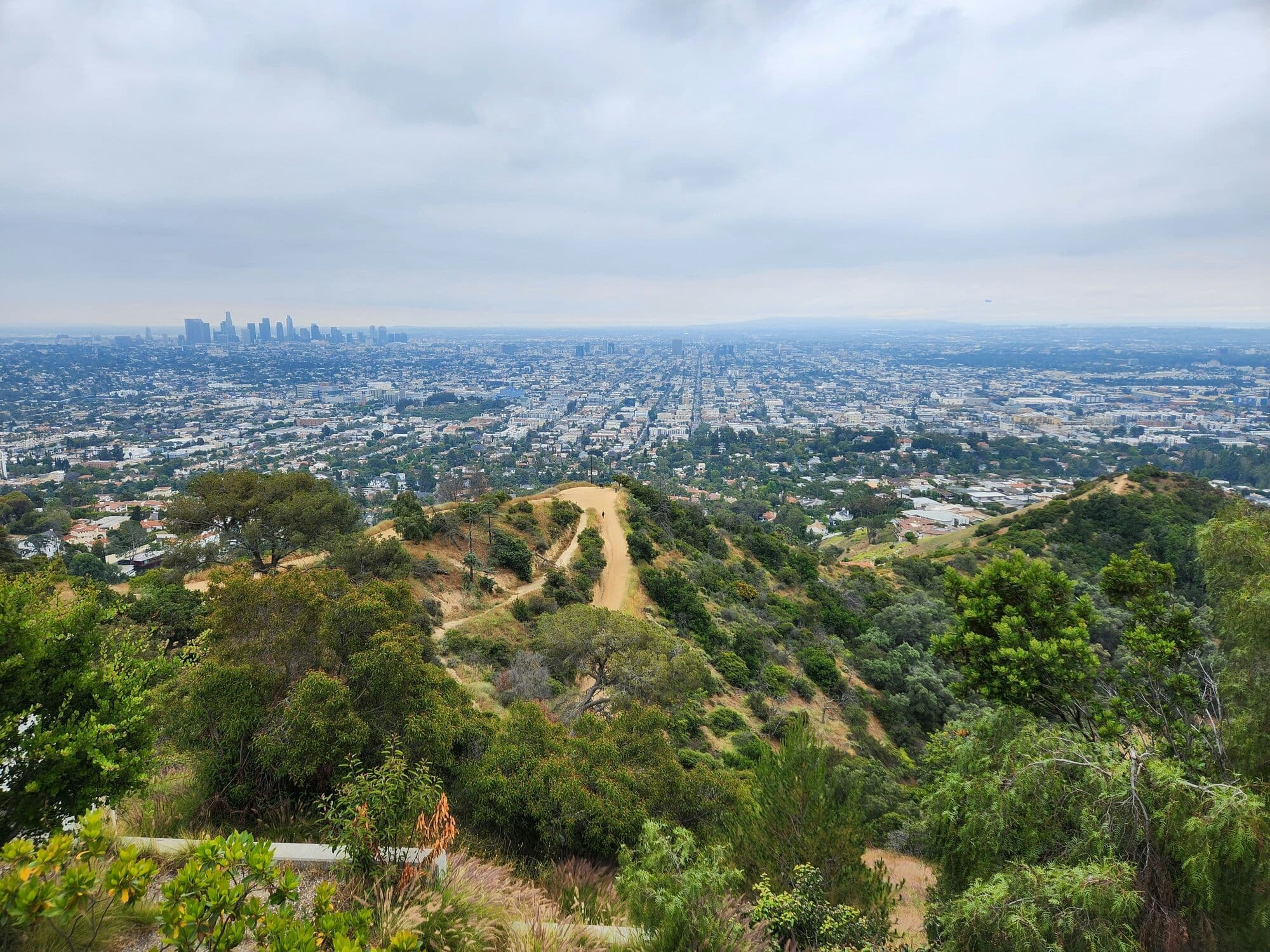
LA is roughly 3.8 million people spread across about 470 square miles, per one guide to meeting people in the city, and that geography changes everything about how an app should behave here. A match in Pasadena is not useful to someone living in Playa Vista, no matter how well the app claims their personalities align. Distance in LA isn't a number, it's a decision about whether you'll ever actually go. That's the proximity filter, and it should be the first thing you check about any app, before you even look at the profile.
The second failure point is follow-through. You match, you talk for a few days, someone gets busy, the thread goes cold. This happens on dating apps and it happens on friend apps, and almost nobody writing about "best apps to meet people" addresses it directly, because it's an uncomfortable thing to admit: the match was never the bottleneck. The plan was. An app that generates a real, timed, located plan beats an app that generates a conversation, every time.
Third: group size. Some nights you want one new friend to text. Some nights you want four people and a reservation. Very few apps are honest about which one they're actually built for, so you end up trying to force a one-on-one app to produce a group hang, or a group app to produce a real friendship, and wondering why it feels off.
apps for finding a group to go out with: washedup, timeleft, and 222
If what you actually want is a group of people to go somewhere with tonight, not a new pen pal, you want WashedUp, Timeleft, or 222, because all three are built around a plan first and a friendship second. The difference between them comes down to structure: algorithm-assigned dinners versus a plan someone in your neighborhood is already pulling together.
WashedUp works from a plan that a real person posts, not a profile you swipe. Someone says "I'm doing a hike Saturday morning" or "who wants to come to this show," and you join it. Right now there are 2 live plans matching this exact question of "where do people actually meet up in LA," and 25 plans on this topic have already happened and filled with real people. The most common time slot for these particular plans is late nights, after 10pm, which tracks with how LA actually socializes: not brunch, but a Friday night that starts once the day is done. The top neighborhoods where these plans are forming are DTLA, Venice, and Santa Monica, and the busiest days are Saturday, with 9 plans, and Sunday, with 7. One recent example: a plan called "Yacht Rock Royalty" for a Toto, Christopher Cross, and The Romantics show at the Long Beach amphitheater, posted for a Friday, capped at 3 people. It filled. That's the whole model in one line: a specific plan, a specific night, a small enough group that showing up doesn't feel like a leap.
Across all of WashedUp, not just this topic, 530 plans have happened and 913 people have joined one. The most active neighborhoods this month LA-wide are the Beach Cities, Los Angeles County broadly, and Hollywood, each logging 4. Small, honest numbers, not inflated ones, but they describe something specific: people posting real plans and other people actually turning up.
Timeleft takes a different route to a similar destination. It reportedly matches users with a group of strangers for a weekly dinner using a personality algorithm, and it operates in LA alongside more than 200 other cities, connecting more than 3 million people, according to its own blog. You don't pick your group, the algorithm does, which some people like because it removes the decision fatigue, and some people find impersonal for the same reason.
222 leans further into picked intimacy. It was reportedly founded mid-pandemic by three Gen Z founders and started as literal backyard dinner parties, with seating charts built from personality questionnaires, per the LA Times. It's a smaller, more deliberate version of the same idea: strangers, a table, a plan someone else designed for you.
Want to see a show with three other people instead of going alone? find people to go with on WashedUp.
apps for one-on-one friend matching: bumble bff, hey vina, and we3
If what you want is one new close friend, not a group activity, Bumble BFF, Hey Vina, and We3 are built for exactly that, and they do it through a swipe-and-chat model closer to dating apps than event apps. The tradeoff is the same tradeoff dating apps have always had: a good match doesn't guarantee a good plan.
Bumble BFF is the most recognizable name in the category and it works the way you'd expect: profiles, swiping, a chat window that opens once you both say yes. The catch, and some LA users have said this directly, is that it can feel superficial precisely because it's so visual, according to the LA Times. A photo and a bio tell you almost nothing about whether someone will actually show up to the coffee you scheduled for Tuesday.
Hey Vina solves for a narrower problem: it's a female-only app recommended specifically for women in LA looking to build a friend circle without the noise of a mixed-gender platform, per LAist. If that's your situation, it's a reasonable first stop, though it inherits the same "then what" problem as Bumble BFF: matching is easy, the second date is not guaranteed.
We3 flips the format entirely, matching you in groups of three instead of one-on-one, which is a smart nod to the fact that a lot of adult friendships form more easily in a small group than in a one-on-one interview. It's still, fundamentally, a chat-first app. Whether the three of you actually meet is still on you.
apps for interest-based groups and events: meetup, strava, and partiful
Meetup, Strava, and Partiful all work off the same principle: find people through the thing you're already doing, not through a personality quiz. Meetup covers interest groups broadly, from hiking to board games to professional networking. Strava turns runners and cyclists in the same neighborhood into a loose community. Partiful is built for organizing the specific one-off event you're already planning.
This is where "best apps for networking in Los Angeles" and "best hobby apps for meeting people" actually converge, because the honest answer to both is the same category of app. Meetup groups in Silver Lake or DTLA built around a shared interest tend to skew toward regular, repeat attendance, which is good for slowly building a real social circle over months. It's a slower burn than a group plan app, and that's fine if you're not trying to fill your Saturday night this week, you're trying to build a Tuesday running group over the next year.
Strava is worth naming separately because it does something the others don't: it turns an activity you're already doing alone into a visible, joinable thing. If you're already running in Echo Park or cycling out toward Culver City, Strava surfaces the people doing the same loop at the same hour, which is a lower-friction entry point than a cold profile.
Partiful isn't really a discovery app at all, it's an invite tool, but it's worth including because so much of "meeting people in LA" actually happens through a friend of a friend's party that got organized on Partiful and shared around. It doesn't solve the "who do I know" problem. It solves the "now that I know them, how do we actually coordinate" problem.
| app | best for | group size | typical rhythm |
|---|---|---|---|
| washedup | a real plan tonight or this weekend | small groups, 3 to 6 | late nights, weekends heaviest |
| timeleft | a structured dinner with strangers | fixed small group, algorithm-assigned | weekly dinners |
| 222 | a designed dinner party experience | small, seating-chart style | occasional, event-based |
| bumble bff | one new friend | one-on-one | ongoing, self-paced |
| meetup | a recurring interest group | varies, often 10+ | weekly or monthly |
| strava | activity-based local community | loose, informal | daily or weekly |
apps worth knowing about depending on your situation: nextdoor, radiate, discord
Nextdoor, Radiate, and Discord aren't general-purpose friend-finding apps, but each solves a specific, narrower version of the problem, and knowing which situation you're in tells you whether one of them is worth your time. Nextdoor is neighborhood logistics first, community second. Radiate is for a very specific subculture. Discord is for people who already know what they're into.
Nextdoor's usefulness has been questioned even by its own numbers: the company's stock has dropped more than 80% since its 2021 IPO, and it's faced real criticism that its feeds feel insufficiently local, according to the LA Times. That's worth knowing before you lean on it as a friend-finding tool. It's better for "does anyone know a good electrician near me" than "who wants to grab a drink Friday."
Radiate gets recommended on Reddit specifically for ravers and the music-festival crowd in LA, which makes it a narrow but genuinely useful tool if that's your scene and none of the broader apps are surfacing your people.
Discord works the same way everywhere it works: you join a server built around a specific interest, and the friendships form as a byproduct of the conversation, not the goal of it. It's less useful if you're starting from zero, more useful once you've found even one community it makes sense to be in.
the la geography problem: why the same app works in silver lake and fails in the valley
The same app can feel completely dead in one part of LA and completely alive twenty minutes away, because LA isn't one social scene, it's a dozen small ones stitched together by freeways nobody wants to drive at 7pm. An app's usefulness depends less on its features and more on how many active people happen to be near you right now.
Silver Lake and Echo Park have dense, walkable, younger populations, and apps that rely on critical mass, Meetup groups, Strava crews, Bumble BFF matches, tend to feel active there because there's simply more density to draw from. West Hollywood has its own gravity for a similar reason. Drive out to the Valley, and the same app can feel like a ghost town, not because the app is worse, but because the user base thins out fast once you're north of the hills.
Santa Monica and Playa Vista skew toward a slightly older, more career-anchored crowd, which is part of why apps oriented around professional networking or fitness communities, Strava especially, tend to overperform there relative to purely social apps. DTLA and Culver City sit somewhere in the middle: dense enough for group activity apps to work, mixed enough that a general app like WashedUp or Meetup tends to outperform a narrower niche app.
This is the part almost no roundup addresses directly: the "best app" question isn't really about the app. It's about whether the app has enough people near you, doing the thing you want to do, at the time you're free. Long Beach and Pasadena each have their own version of this same density problem, just with a different center of gravity. An app that feels dead in one zip code can feel completely different fifteen minutes away, which is exactly why WashedUp's plan data breaks out by neighborhood instead of pretending LA is one market. DTLA, Venice, and Santa Monica are currently where the plans on this exact topic are concentrating, each logging 2. That's not a coincidence, that's density showing up as data.
how to actually use any of these apps and get off the couch
The move that actually works is this: pick the app that matches the size of thing you want (one friend, a small group, a recurring interest circle), pick a plan or event that's close enough to drive to without dreading it, and commit to the specific date before you talk yourself out of it. The app is the easy 20%. Showing up is the other 80%, and no algorithm does that part for you.
Want to hike somewhere close to home instead of scrolling for another week? find people to go with. The point of naming a specific plan, a specific Friday, a specific group cap of 3 or 4, isn't a gimmick. It's the exact mechanism that turns "I should meet people" into "I did." That's the entire difference between an app that produces conversations and one that produces Saturdays.
If you're new to this and don't know where to start: start with the smallest possible commitment that still has a real time and place attached to it. Not "let's hang out sometime." A Friday night show. A Saturday morning hike. A Sunday dinner with three other people. Want a group for Saturday instead of another maybe? find people to go with.
Pick one plan this week, something with an actual date on it, in a neighborhood you can reach without dreading the drive, and join it instead of saving it for later.
frequently asked questions
What is the best app to meet people in Los Angeles?
There isn't one best app, there's a best app for your situation. WashedUp works best if you want a real plan with a small group tonight or this weekend. Bumble BFF or Hey Vina work best if you want one close friend. Meetup or Strava work best if you're building a recurring community around a shared interest over months, not days.
How do you make friends in LA as an adult?
Pick something with a fixed time, place, and small group size, not a vague "let's hang out." Adults in LA make friends through repeated, low-stakes contact: the same run group, the same Saturday hike, the same weekly dinner. Apps like WashedUp, Meetup, or Strava work because they attach a real plan to the intention instead of leaving it as a chat thread.
Is Bumble BFF popular in Los Angeles?
Yes, it's one of the most used friend-finding apps in the city, but some LA users have described it as superficial because of its visual, swipe-first format, according to the LA Times. It's a reasonable starting point for meeting one new friend, though matching there doesn't guarantee the follow-through into an actual hangout.
What social apps do Angelenos actually use?
It depends on the neighborhood and the goal. WashedUp, Timeleft, and Meetup show up heavily for group plans and interest communities. Bumble BFF and Hey Vina show up for one-on-one friend matching. Strava is common among the running and cycling crowd. Nextdoor gets used for neighborhood logistics more than genuine friend-making.
Why is it hard to make friends in LA?
LA spreads roughly 3.8 million people across about 470 square miles, so proximity, not personality, is often the real barrier. A great match across town is still a 45-minute drive you'll likely skip. Add in a culture where plans get proposed but rarely locked to a real date, and matches quietly stall out before anyone actually meets.
Stay in the loop
Get stories, LA guides, and social tips delivered to your inbox every week. No spam, ever.