You make friends in LA as an adult the same way you'd make friends anywhere: repeated, low-stakes contact with the same people over weeks. The difference is you have to build that repetition yourself. Join a free walking group or a run club, pick one recurring hobby class, and go with a real person the first time instead of walking in alone.
That last part matters more than people admit. Nobody tells you the actual mechanism is showing up five or six times, not once.
why making friends in la feels uniquely hard (and why it's not your fault)
tired of doing things alone in LA?
Find people to go with on WashedUp. Small group plans, no swiping, no endless chatting. Just plans. That actually happen.
LA doesn't have the collision infrastructure other cities have built in by accident. No shared subway car, no walkable main street you pass your neighbors on, no office hallway. You have to manufacture the repeated contact that friendship actually runs on, and that takes more intention here than almost anywhere else.
Compare it to a city where the friction is transportation, not social structure, and LA's problem comes into focus. In New York you bump into the same barista, the same dog walker, the same guy from 4B, without trying. In LA you drive from a sealed apartment to a sealed office to a sealed car, and the only unscripted contact you get is at a red light. Freelancers and remote workers feel this hardest. If you work from home in Silver Lake or Culver City, you can go four or five days without a real conversation that isn't over Slack, and that isolation compounds in a way office workers rarely register until they've lived it.
It's also not evenly distributed by neighborhood. The Eastside, think Echo Park, Silver Lake, Los Feliz, has a denser texture of walk-up bars, galleries, and recurring meetups, so it rewards people who show up to the same few spots repeatedly. The Westside runs more scheduled and fitness-driven, book a class, see the same faces. The Valley is quieter and more word-of-mouth, so you often need one plugged-in friend to get the invite in the first place. None of this means one side of town is friendlier. It means you should pick a neighborhood cluster to focus your energy on rather than spreading thin across the whole basin.
There's also a real-time reason to lean into this now. LA is heading into an Olympic cycle in 2028, and the community energy around that, new meetups, new leagues, new civic pride, is already building. Getting into the habit of showing up to local groups now means you're inside that wave instead of catching up to it later.
the free, low-barrier entry points: walking groups, run clubs, and open fitness
Start here if cost or commitment is the thing stopping you. LA Times reporting has identified at least 10 active walking groups across Greater LA, including Hot Girl Walk, LA Girls Who Walk, Slow Walkers Club, and SoCal LGBTQ+ Explorers, all free, all recurring, all designed for exactly this problem.
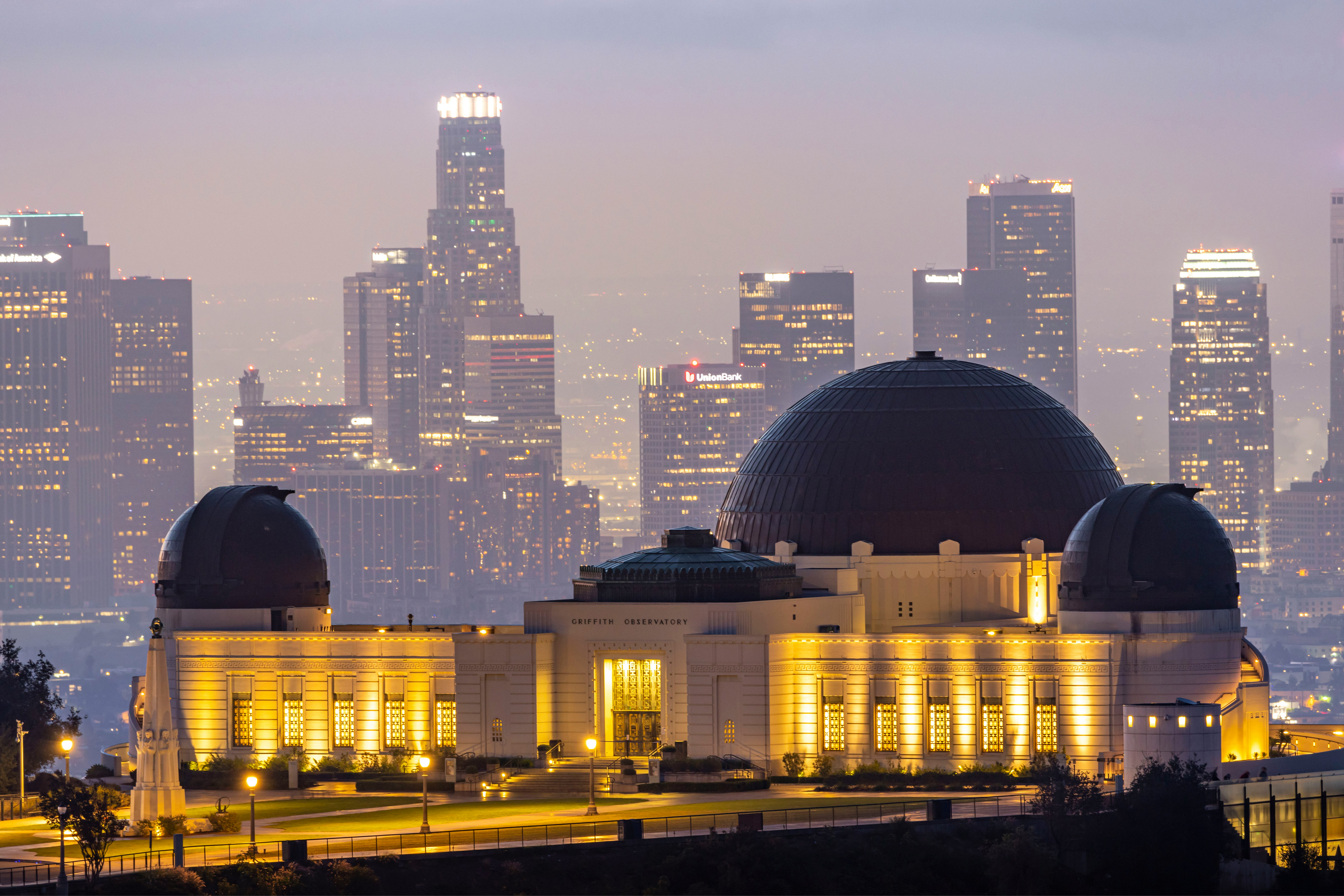
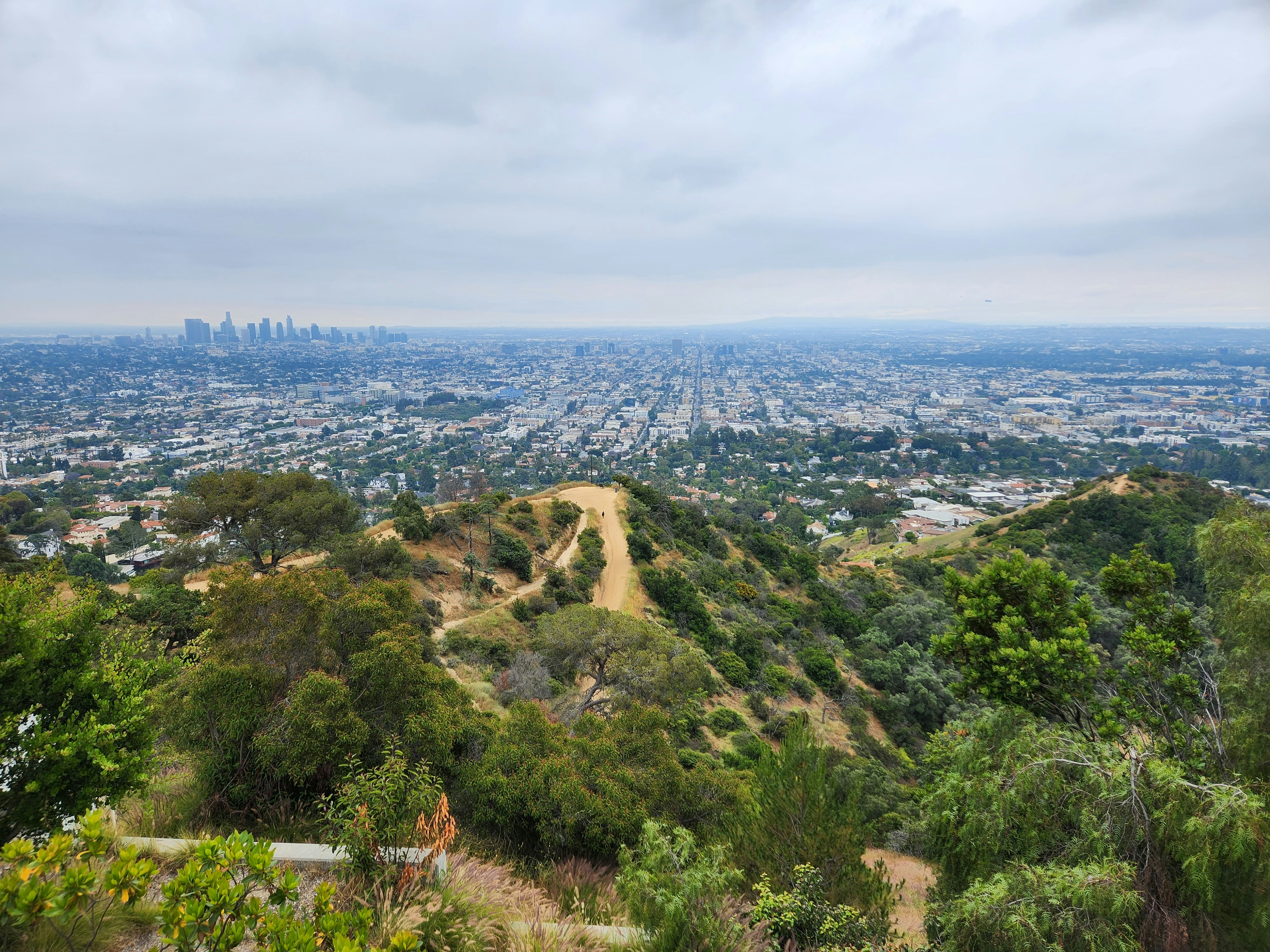
These groups work because the bar to attend is almost zero. You don't need gear, a reservation, or a skill level. You show up, you walk, you talk to whoever's next to you. WalkGood LA runs outdoor wellness sessions at Kenneth Hahn State Recreation Area and also has a home base, WalkGood Yard, in Arlington Heights, which gives you both an outdoor option and an indoor studio to return to depending on the week. Griffith Park Social Club runs a recurring outdoor meetup around Los Feliz and Griffith Park that functions the same way: no membership, just a standing time and place you can build a habit around.
Run clubs work on the same logic, minus the small talk pressure, since you're mostly moving side by side rather than facing each other. The point of all of these isn't the walk or the run. It's the fifteen minutes before and after, when you're standing around in workout clothes with nowhere to be, which turns out to be one of the easiest conditions for a real conversation to start.
recurring hobby groups that actually stick: sports leagues, improv, creative classes, and book clubs
The groups that convert strangers into friends are the ones you attend on a schedule, not the ones you attend once. A rec league, a weekly improv class, a monthly book club, a pottery workshop, anything with a built-in reason to see the same dozen people again in seven days.
This is where Junior High comes in, a nonprofit art gallery and gathering space around Silver Lake and Echo Park that hosts artist showcases, comedy nights, and pottery workshops. It's a good example of a place that isn't trying to be a "friendship venue" at all, it's a gallery, but the recurring programming means you can become a regular there the same way you'd become a regular at a coffee shop. LA Breakfast Club, an early-morning social club that meets at various LA locations, works on a similar principle but for people whose energy peaks before 9am rather than after 9pm.
Sports leagues and improv classes have an advantage the others don't: they force you to fail in front of each other early, which strips out a lot of the performance anxiety that makes small talk exhausting. Book clubs work slower but longer, since the conversation has a built-in topic every time, which takes pressure off the first ten minutes.
named social clubs and picked communities worth knowing (and what they cost)
If free groups feel too loose or too crowded to break into, paid clubs solve for structure at a real cost. Groundfloor in Echo Park runs about $200 a month for a dues-based community space. Earlybirds Club hosts events at The Bellwether in DTLA for $40 a session. Los Angeles Athletic Club starts at $139 a month.
Each of these buys you something specific. Groundfloor, reportedly around $200 a month per LA Times reporting, functions like a members' living room, a consistent physical space with a consistent crowd, which is worth it if you want somewhere to return to without having to organize the gathering yourself. Earlybirds Club, at $40 per event according to Time Out, held at The Bellwether at 333 S Boylston St in DTLA, is lower commitment: you pay per event rather than monthly, which is a good way to test whether a social club format works for you before you commit to dues. Los Angeles Athletic Club at 431 W 7th St downtown starts at $139 a month for members 31 to 34 and $181 a month for 35 and up per Time Out, and functions more like a traditional club with a gym and event calendar built in, useful if you want fitness and social life under one membership.
LAF, or LA Friends, took a different route entirely: it was founded via TikTok and now runs primarily through Discord with smaller in-person meetups, including Jenga icebreakers, layered on top. It's a useful reminder that the paid, physical-space model isn't the only one that works. Sometimes the online layer comes first and the in-person meetup follows once people already have context on each other.
| club or group | neighborhood | best for | rough cost |
|---|---|---|---|
| groundfloor | echo park | a consistent space to return to weekly | about $200/month |
| earlybirds club | dtla (the bellwether) | testing the format before committing | $40/event |
| los angeles athletic club | downtown la | fitness plus a built-in social calendar | from $139/month |
| walkgood la | arlington heights / kenneth hahn | free outdoor movement and low pressure talk | free |
Rummikub has its own scene too. RummiKlub events run at Gravitas in Beverly Hills, with tickets from $35 just to hang to $50 to actually play, which is a good option if you want a game-first, talk-second kind of night.
the app layer: how to find one actual person to go with before you show up alone
Every guide tells you to join a group. Almost none of them tell you how to get through the door the first time, which is the actual barrier. The fix is finding one person to go with before you show up, so the first visit isn't a cold walk into a room of strangers alone.
This is the gap. Bumble BFF and Meetup are useful for browsing what exists, but they mostly stop at "here's a group," leaving you to walk in solo anyway. That first solo walk-in is where most people quietly bail. Want to hit a walking group in Griffith Park with someone instead of alone? find people to go with. Want to try a Rummikub night at Gravitas without being the only person who came by themselves? find people to go with.
This is the layer WashedUp exists in specifically. Right now there are 4 live plans matching this kind of social, low-stakes gathering across LA, and 67 have already happened on the app, so the pattern is established, not theoretical. One matching plan is happening in the next 7 days. The most common time slot for these plans, somewhat surprisingly, is late nights after 10pm, and the busiest days are Saturday (37 plans) and Sunday (20), which tracks with when people actually have the mental space to be social rather than recovering from a work week. Top neighborhoods for these plans right now are Los Angeles County broadly, Santa Monica, and Glendale.
The mechanism is simple: someone posts a plan, you see who else is going, and you show up already knowing one name. That single known name is often the entire difference between attending and not.
how to go from 'we should hang out' to a real friend: the conversion problem nobody talks about
Attending a group gets you acquaintances. Turning an acquaintance into a friend requires a second, deliberate step that almost no advice column names: you have to initiate outside the group context, at least once, within a few weeks of meeting them.
Most friendships in LA die quietly at "we should hang out sometime," because nobody follows up, and the group setting itself never forces a real one-on-one. The fix is boring but reliable: pick one person from the walking group or the class, and text them directly to grab coffee or catch the next session together, before the initial warmth fades. Do this within two to three weeks of meeting someone, not two to three months.
Here's a six-week framework that actually works, because it matches how habits form, not how motivation feels. Weeks one and two, attend the same recurring thing twice, same group, same time slot, so your face becomes familiar rather than new. Weeks three and four, have one direct one-on-one interaction with a specific person from that group, coffee, a walk, anything outside the group's usual format. Weeks five and six, invite that person to something you're organizing, even something small, since the person who initiates the third meeting is usually the person who becomes the actual friend, not just the familiar face. Skipping any of these three steps is why so many "great group, met some cool people" experiences never turn into an actual friendship.
where washedup users are actually making plans in la right now
Across all categories, not just this one, 530 plans have happened on WashedUp and 913 people have joined them, which tells you the coordination problem this piece keeps circling back to is a real, common one, not a niche complaint. This month, the most active neighborhoods LA-wide are Beach Cities, Los Angeles County broadly, and Hollywood, each with 4 active spots on the board.
Inside the friend-making category specifically, the numbers are smaller and more specific, which is exactly the point: a representative plan called "Chess & Brunch" in Venice on a Saturday drew 5 people and filled up completely. That's the size that actually works for meeting people, small enough that everyone talks to everyone, structured enough that nobody has to carry the conversation alone. Want to build something like that instead of hoping one falls into your lap? find people to go with.
If you're deciding where to spend your energy first, start with whichever entry point costs you the least to fail at. Join one free walking group, Griffith Park Social Club or a Hot Girl Walk chapter near you, attend it twice in the same two weeks, and text one person from it directly before the third session. That single sequence, repeated, is the whole strategy.
frequently asked questions
is it hard to make friends in los angeles as an adult?
Yes, but not because Angelenos are unfriendly. LA lacks the walkable, shared-commute infrastructure that creates accidental repeated contact in denser cities, so friendship here has to be built on purpose through recurring groups, classes, or clubs rather than happening passively through daily routine.
what are the best social clubs in la for adults?
Groundfloor in Echo Park (about $200/month), Earlybirds Club at The Bellwether in DTLA ($40/event), and Los Angeles Athletic Club downtown (from $139/month) are all named, active options. Junior High in the Silver Lake and Echo Park area and LA Breakfast Club offer lower-cost, recurring alternatives.
what apps do people use to make friends in la?
Bumble BFF and Meetup are common for browsing groups and events, but both leave you to walk in alone the first time. WashedUp fills that specific gap by letting you find one actual person to go with before you show up, which is the step where most people otherwise bail.
how do you meet people in la if you work from home?
Anchor your week around one recurring in-person commitment, a free walking group, a fitness session at Kenneth Hahn State Recreation Area, or a class, since remote work removes the accidental office contact that used to fill this role. Attend the same one twice before judging whether it's working.
what neighborhoods in la are the best for making friends?
The Eastside (Echo Park, Silver Lake, Los Feliz) has the densest cluster of recurring meetups and walk-up venues. The Westside leans scheduled and fitness-driven. The Valley is quieter and more word-of-mouth. Pick one cluster to focus your energy rather than spreading thin across all three.
Stay in the loop
Get stories, LA guides, and social tips delivered to your inbox every week. No spam, ever.